DeepSeek Harness Explained: 181K Stars, and the Brain I Built to Vet It
By Agrici Daniel | August 22, 2026
DeepSeek Harness is a 181K-star open-source agent framework where everything is a plugin. I built an evidence-gated Obsidian brain to review its architecture before porting any of it, here's how both work.

DeepSeek Harness (dsh) is DeepSeek AI's open-source agent harness, and as of this week it sits at 181,048 stars and 19,792 forks on GitHub (deepseek-ai/deepseek-harness, checked August 2026). That is not a typo. It is one of the fastest-growing agent frameworks in the open-source ecosystem, and its core idea is almost defiantly simple: everything is a plugin. The framework underneath it is Cordis, and under Cordis there is no privileged core to patch: the model adapter, the tool registry, the session log, and the agent loop itself are all plugins, so every part of dsh is replaceable from configuration instead of a fork.
A running dsh instance is a plugin tree assembled at boot from named profiles, such as web and headless, that stack distributable bundles like dsh-base, dsh-web-app, and dsh-headless, then layer a user's own cordis.patch.yml on top. You can print the exact tree your machine boots with dsh --profile web --dump-config, and replace any row in it with a patch of your own. Inside that tree, work moves through a turn/step model: a turn opens when input is claimed and closes once nothing is owed, a step is one model request plus the tools it calls, and durable session events record every step so the log, not memory, is what gets replayed into the next model request. That rule, model-visible means logged, is enforced as a runtime invariant, not a convention.
Before I ported a single pattern from it into anything I ship, I wanted an honest map of how it works, not a marketing summary. So I built DeepSeek Harness Brain, an independent, evidence-gated Obsidian knowledge base that reviews the framework's architecture, operations, and security boundaries instead of restating its docs. This post covers both: what DeepSeek Harness is under the hood, and what the brain found worth trusting, porting, or waiting on.
Listen to the summary
Key Takeaways
- DeepSeek Harness has 181,048 stars and 19,792 forks on GitHub as of August 2026, and is still in developer preview with breaking changes expected
- Its architecture is built entirely on Cordis, a plugin composability engine: sessions, tools, permissions, and providers are separate, swappable capabilities, not one tangled runtime
- DeepSeek Harness Brain is a separate, independent v0.2.0 community release: a source-cited Obsidian vault that reviews the harness instead of summarizing its README
- Every claim in the brain is gated against a pinned upstream commit; it currently passes 4 verified evidence lanes and is explicit about 7 runtime tiers it has not yet verified
- Five harness patterns are strong, framework-neutral candidates to port into your own agent projects today, independent of DeepSeek Harness or Cordis
What DeepSeek Harness Is
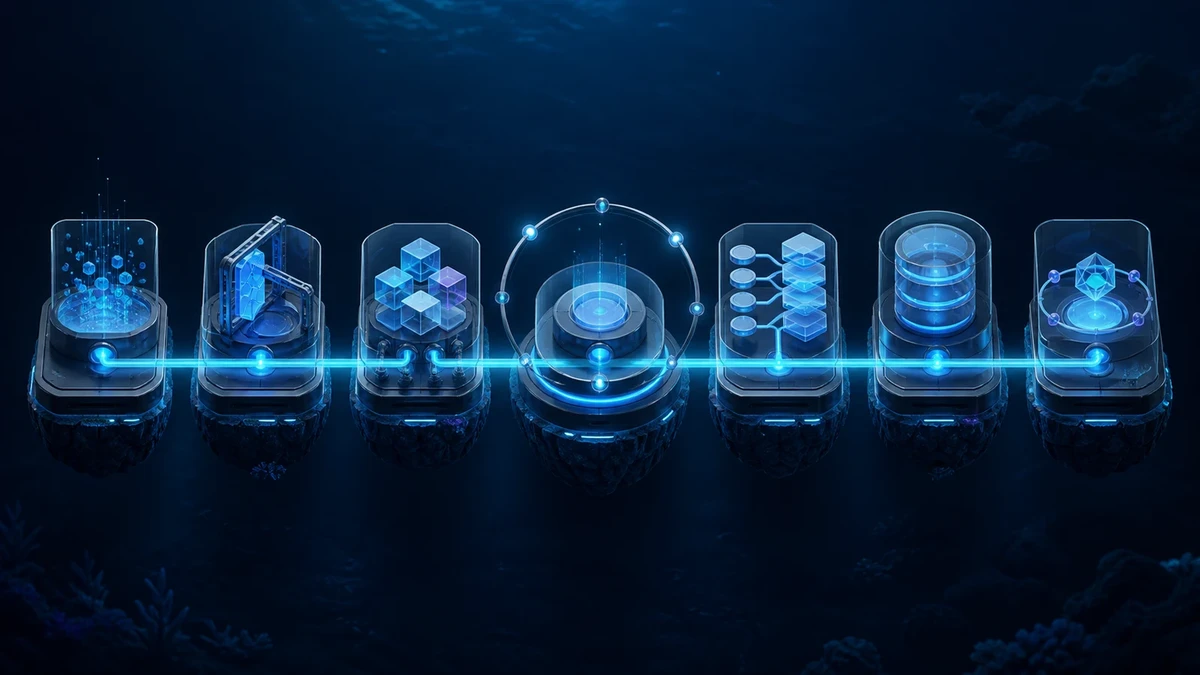
Strip away the branding and DeepSeek Harness is an agent runtime where the loader, not the application, owns composition. Instead of a monolithic core with a hardcoded set of tools and providers, DeepSeek Harness treats sessions, tool execution, permissions, persistence, and model providers as independent plugins that Cordis loads, wires, and can hot-swap. That design is described formally in A Programming Paradigm for Spatiotemporal Composability, the paper behind Cordis.
The unit that makes this concrete is what the docs call a capability seam: a swappable capability with three roles, a Service Definition that declares the interface, a Service Provider that implements it, and a Consumer, usually a model-facing tool, that uses it. Filesystem and subprocess providers share one execution world in dsh, so pointing them at a remote sandbox moves Bash, PTY, and LSP with them, with no provider forks needed elsewhere. Subagent providers vary just as widely behind one interface, from a fresh child agent to a delegated turn in another product entirely. Extension points themselves fall into three domains: durable session events for anything that must survive a reload, live agent/* events for observing or intercepting work in flight, and capability events like fs/* and tools/* for attaching policy without importing the agent loop.
You can be running the Web UI in under a minute:
npx @deepseek-ai/dsh webThat starts a local server at http://127.0.0.1:3080. Running from source instead gives you the full development loop:
git clone https://github.com/deepseek-ai/deepseek-harness.git
cd deepseek-harness
pnpm install
pnpm run build
pnpm dsh web
The project is upfront that this is a developer preview: package names, defaults, event semantics, and on-disk formats are all still moving. That is not a criticism, it is the honest cost of an everything-is-a-plugin design iterating in public. It does mean anything you build against it today needs to expect churn.
The Brain I Built to Review It
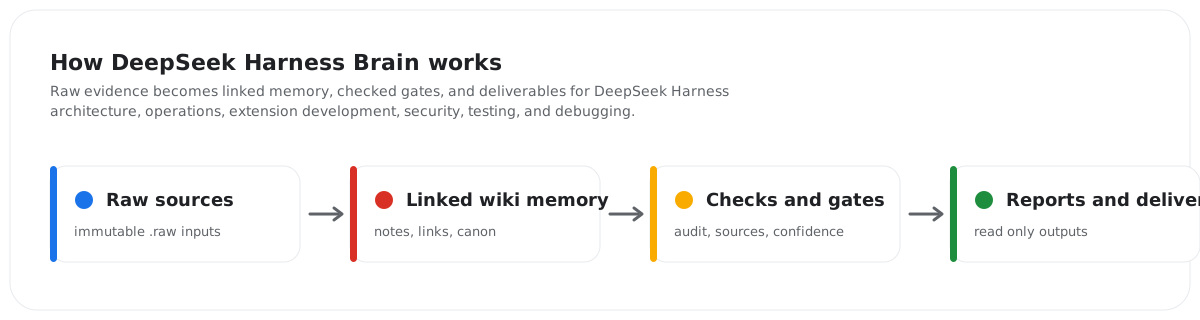
Most "second brain" projects for a piece of software are a reorganized copy of its documentation. I did not want that, mostly because I have been burned by AI-generated technical summaries that state framework behavior with total confidence and no source. So DeepSeek Harness Brain works differently: it is advisory, read-only, and evidence-gated by construction. Every domain claim needs a dated, trustworthy source. Nothing gets a stronger maturity label than the check that produced it.
Version 0.2.0 shipped this week as the first community release, reviewed against a pinned upstream commit of DeepSeek Harness. It ships:
- A plain-language map of how the harness's subsystems fit together
- Source-cited notes on sessions, tools, permissions, persistence, plugins, Cordis, subagents, prompts, providers, and verification
- A portability matrix separating reusable patterns from Cordis-specific machinery
- A deterministic sample Obsidian vault and an allowlisted checkout importer
- A grounded secretary agent plus four curator agents for evidence-based review
Getting a working copy running takes about five minutes:
python -m pip install -e .
deepseek-harness-brain demo
deepseek-harness-brain lint --vault examples/sample-vault
deepseek-harness-brain report --vault examples/sample-vault --html-only
To check a real local DeepSeek Harness checkout against the reviewed evidence instead of the bundled sample:
deepseek-harness-brain import-checkout \
  --checkout /path/to/deepseek-harness \
  --vault examples/sample-vault \
  --expected-commit b150a551b8d465e31e418e1b2eaf5e79bbb7d28e \
  --as-of 2026-08-21
What "Evidence-Gated" Means Here
The brain will not let itself claim more than it has checked, and it says so out loud. That is the part I think is worth copying into any technical documentation project, AI-assisted or not.
Release 0.2.0 Evidence Ledger
Verified (4)
- ✓ Allowlisted source capture and domain adapter tests
- ✓ Deterministic template and sample vault checks
- ✓ Local pipeline and community packaging gate
- ✓ License, attribution, secret, local-path, symlink, and archive checks
Not Yet Verified (7)
- ○ Interactive Web profile
- ○ Live DeepSeek provider behavior
- ○ macOS, Windows, and ARM
- ○ Native and Python release packaging
- ○ Comprehensive independent security audit
- ○ Complete repository test and release matrix
- ○ Production load and long-running durability
4 of 11 evidence tiers verified so far, per references/release-status.json. Market-ready stays false until the rest close.
That is why the project calls itself community-ready and not market-ready: the source, license, and packaging gates pass, but browser, live-provider, native, cross-platform, and production-scale evidence are still open. The release status file says so explicitly instead of rounding up.
What to Port First
The brain's portability matrix is blunt about which parts of DeepSeek Harness are genuinely framework-neutral versus which only make sense if you have adopted the full Cordis runtime. The strongest candidates for porting into an existing agent project, independent of Cordis entirely, are:
- Append-only session events and reconstructable model requests
- One guarded tool executor with typed approval and cancellation
- Capability seams that separate definition, provider, and consumer
- Deterministic prompt and tool-schema assembly
- A small durable persistence contract before reaching for a complex backend
Profiles, hot reload, model-authored workflows, generated RPC, and the full Cordis runtime are only worth adopting when a product's complexity matches them. Most agent projects do not need the whole harness to benefit from these five patterns.
Who This Is For
- Developers evaluating whether DeepSeek Harness's architecture fits a real product, not a demo
- Teams deciding which harness patterns to port into an existing agent stack instead of adopting Cordis wholesale
- Operators who want an evidence trail behind every architectural claim instead of an unsourced summary
- Contributors who want to check DeepSeek Harness's claims, tests, lifecycle behavior, or security boundaries before relying on them
Try Both Yourself
DeepSeek Harness itself: npx @deepseek-ai/dsh web, or clone and build from source as shown above. It is MIT licensed, actively iterating, and has a Discord community plus GitHub Discussions for feedback and bug reports.
DeepSeek Harness Brain: python -m pip install -e . then deepseek-harness-brain demo. It is also MIT licensed, open source, and the full source and evidence ledger are on GitHub.
One disclosure worth being explicit about: DeepSeek Harness Brain is an independent research project. It is not affiliated with or endorsed by DeepSeek. The DeepSeek name and whale mark appear only to identify the framework under review.
Related Posts
- Claude Obsidian: An AI Second Brain That Actually Cites Its Sources - the sibling approach to evidence-gated knowledge bases, built for Claude Code instead of DeepSeek Harness
- Inside the Claude and Codex Skills Ecosystem - how portable agent skills compare across harnesses
- How I Got 8,000 GitHub Stars on an Open-Source AI Tool - what moves the needle for a new open-source release
Join 4,500+ AI Marketing Builders
Get workflow templates, automation blueprints, and connect with SEOs, agency owners, and creators who ship.
JOIN FREE →